
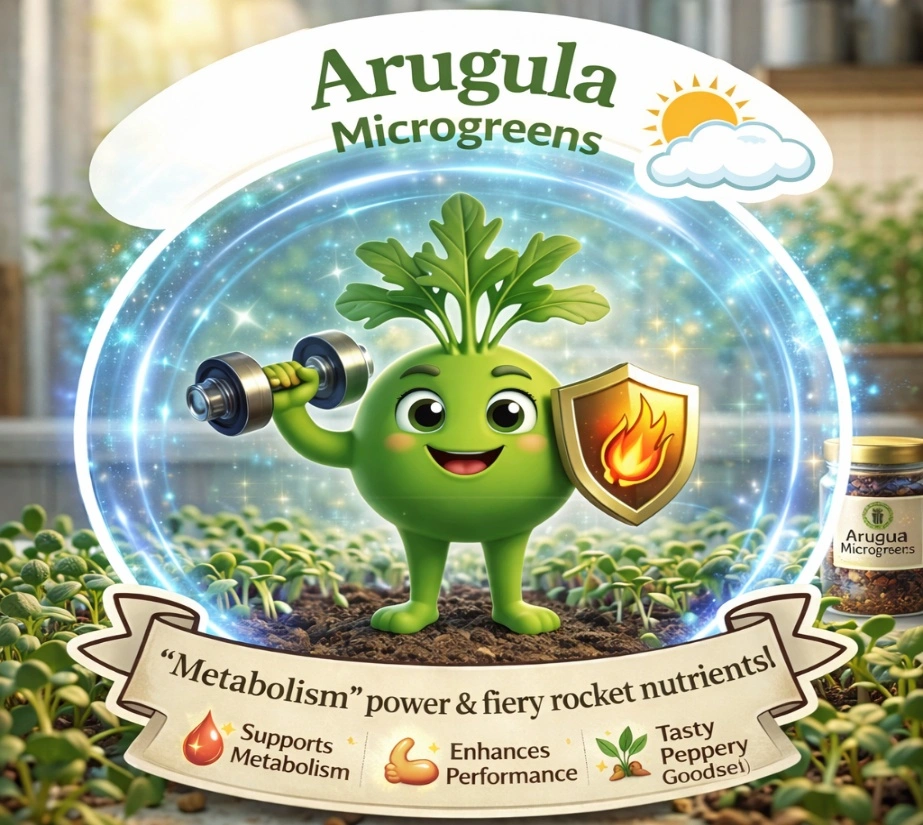
Core Health Benefits
- Bone Strength: Rich in Vitamin K, which is essential for calcium absorption and maintaining high bone density.
- Skin Vitality: High levels of Vitamin A and antioxidants help protect skin from UV damage and promote a healthy “glow”.
- Eye Health: Contains lutein and zeaxanthin, which are critical for protecting eyes from age-related decline.
- Detoxification: Contains glucosinolates, which assist the liver in neutralizing environmental toxins.
Nutritional Profile (The “Super” Factor)
- Vitamin K: Provides a massive dose for skeletal support.
- Vitamin A & C: Dual-action support for immunity and cellular repair.
- Calcium & Iron: Plant-based minerals that are highly bioavailable in microgreen form.
- Glucosinolates: These sulfur-containing compounds give arugula its spice and anti-cancer potential.
The “Powerhouse Ratio”: Micro vs. Mature
| Nutrient | Microgreen vs. Mature Ratio |
| Vitamin K | ~10x to 15x higher per gram. |
| Vitamin C | ~5x higher concentration. |
| Beta-Carotene | ~8x to 10x higher for better vision. |
Who Should Avoid Arugula Microgreens?
- Blood Thinners: Due to its very high Vitamin K content, individuals on anticoagulants like Warfarin should consult a doctor.
- Kidney Stones: Like Amaranth, it contains oxalates, though in lower amounts than spinach.
- Thyroid Issues: In very large quantities, the goitrogens in cruciferous greens like Arugula can interfere with iodine uptake.
Culinary Tips
- The Flavor: Sharp, peppery, and nutty. It’s like a concentrated version of the Italian salad leaf.
- The Look: Beautiful, jagged “oak-leaf” shapes that add a high-end restaurant look to any plate.
- Parent’s Secret: If the spice is too much for kids, blend it into a “Super-Hero Pesto” with basil and olive oil—the spice disappears into the sauce!