
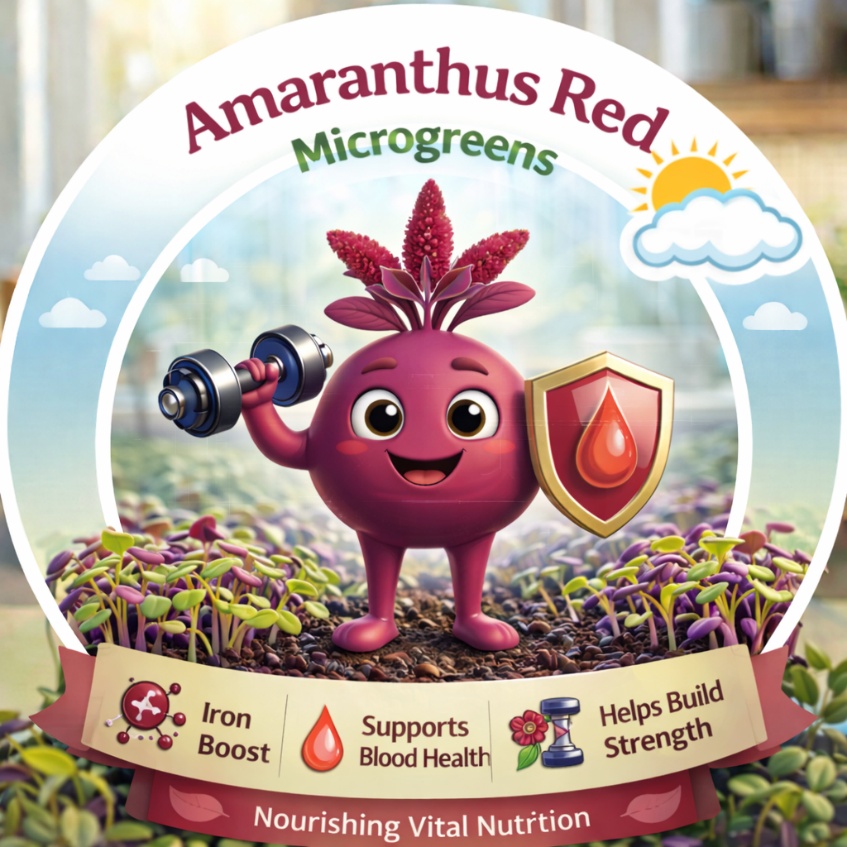
“Why eat a mountain of greens when you can get more power from a handful? Our Amaranth Red microgreens pack up to 40 times the Vitamin E of the fully grown plant, delivering nature’s multivitamins in every bite.”
Core Health Benefits
- Energy & Blood Health: Its exceptionally high iron content supports healthy hemoglobin levels and overall vitality.
- Bone Density: Amaranth is a rare plant-based source of Vitamin K and Calcium, essential for building and maintaining strong bones.
- Anti-Inflammatory: Rich in betalains (the same pigments found in beets), which have powerful antioxidant and anti-inflammatory properties.
- Digestion: Provides a dense source of fiber in a tiny package, supporting a healthy gut.
Nutritional Profile (The “Super” Factor)
- Vitamin K: High levels that support blood clotting and bone health.
- Vitamin C & A: Essential for skin health and immune function.
- Complete Protein: Unlike many other greens, Amaranth contains all the essential amino acids.
- Minerals: Loaded with Magnesium, Potassium, and Phosphorus.
Culinary & “Parent’s Secret” Tips
- The Flavor: It has a mild, earthy, and slightly sweet taste—very similar to traditional spinach but more delicate.
- The Look: Its fuchsia-pink color makes it the perfect “garnish” to make any dish look premium.
- The Secret: Its color is a huge hit with kids. Tell them it’s “Magic Pink Dust” to sprinkle over their favorite pasta or salad.
Who Should Avoid Amaranthus Microgreens?
- Individuals with Kidney Stones: Amaranthus is high in oxalates, which can contribute to the formation of calcium-oxalate kidney stones.
- Those on Blood Thinners: Because it is rich in Vitamin K, which aids in blood clotting, it may interfere with anticoagulant medications like Warfarin.
- People with Specific Allergies: While rare, individuals with a known allergy to the Amaranthaceae family (which includes spinach and beets) should avoid it.
- Individuals with Low Gastric Acid: High oxalate levels can sometimes interfere with the absorption of other minerals in those with compromised digestive systems.